
I have always felt I needed things to be done ‘the right way’.
When problem-solving, I often tried to find the optimal way of fixing the problem by finding an ingenious solution that would get the job done faster. Often, creating this new and better way of solving the issue would take longer than if I had just solved the problem the boring or most obvious way. However, if the problem was likely to occur again, it would save time in the long run.
My business partner has mentioned this personality trait could have something to do with a fear of failure. This could be true but it hasn’t been a conscious reason.
While growing my business, I have had to let go of the notion that ‘if you want something done properly, you have to do it yourself’. A notion that has taken me a long time to let go of, believe me!
I still feel this way sometimes when I am observing a colleague or family member attempt a task. For example, watching them try to do a task on a laptop which would take me about a tenth of the time by using things like shortcuts etc. In these situations, I have to remind myself that different people have different skills.
Recently, this personality trait has led to mental exhaustion, burnout, and feelings of being overwhelmed, to the point where I end up not doing any of the things I wanted to do.
In this post, I’ll share my relationship with perfectionism, and if you’ve ever felt trapped by your own high standards, I’ll also offer some practical strategies to help you find balance and keep moving forward.
Overwhelm and Burnout
Perfectionism is often linked to taking on too many tasks and becoming overwhelmed – honestly, this is exactly where I find myself right now. A couple of months ago, I had a burst of inspiration and overloaded myself with every idea I wanted to bring to life.
At the start of 2024, my goals included building this website, starting this blog, journaling more, uploading my photography, reading nine books (one more than 2023), and launching my own YouTube channel. On paper, it seems like a lot—especially when balanced with running businesses. Yet, I genuinely believed I could manage most of it.
To my credit, I did achieve most of them. I built this website, started blogging, uploaded photography regularly, and even started my personal YouTube channel (it currently has one lonely video which you can see below!).
Alongside this, I also started another channel with Jon, my business partner, which is the one I’m focusing on more.
Creativity has a funny way of snowballing. New ideas continued to spark: the book list expanded, more video ideas and channels emerged, a side hustle for extra income was (and still is being) considered, and a photography course was started— the list kept growing.
Perfectionists often struggle to prioritise because everything feels equally important. They fear delegation, worried that others won’t meet their exacting standards. This results in mental exhaustion, burnout, and a crushing sense of overwhelm.
Dr. Brené Brown captures this perfectly while speaking on perfection for musicians. She explains:
“Most perfectionists grew up being praised for achievement and performance—grades, manners, rule-following, people-pleasing, appearance, sports. Somewhere along the way, they adopted this dangerous and debilitating belief system: ‘I am what I accomplish and how well I accomplish it.”

As someone who played classical music from age 7 to 18, I can deeply relate. That mindset was one of the reasons I stopped playing altogether.
The joy was stripped away, replaced by an obsession with hitting the notes perfectly for the piece and avoiding mistakes altogether. The soul of the music—the very thing that made me fall in love with it at age 5—was lost.
Analysis Paralysis
Perfectionism also breeds something known as analysis paralysis. You overthink every decision, scared of making the wrong move. Counterintuitively, this obsession with perfection often leads to lower productivity and dissatisfaction.
When I was producing electronic music, I experienced this first-hand. I’d spend hours obsessing over finding the perfect snare or synth sound or EQing the perfect kick drum, and, ironically, the results were less satisfying.
Over time, I learned to stop nitpicking the details at the start. Instead, I’d throw sounds and drum patterns into the timeline and let the piece unfold naturally, swapping out snares or kicks later during the EQing, mixing and editing phase.
This approach allowed me to enter a flow state—focusing on creative expression first, and saving the so-called ‘left-brain’ technical tweaks for later.
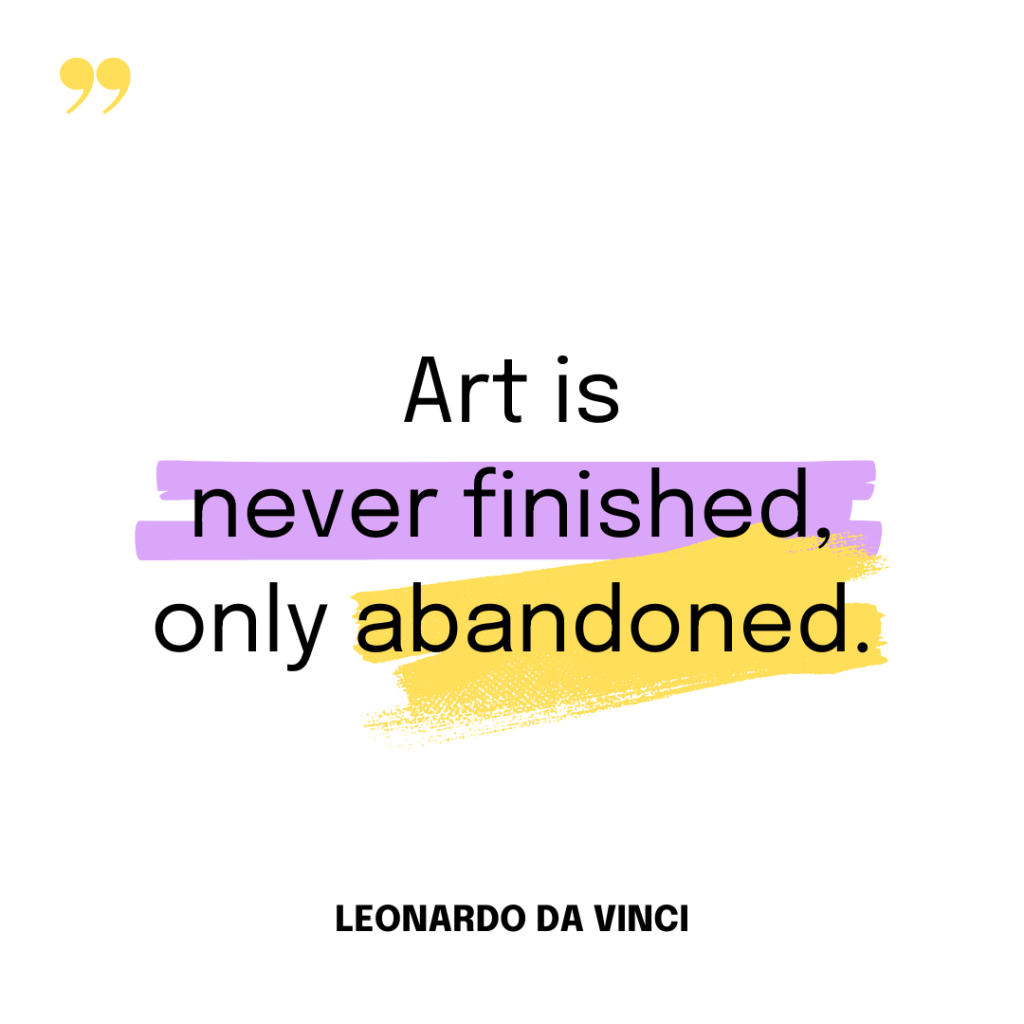
It’s a lesson I’m still trying to carry into other areas of my life: progress over perfection.
Perfectionism Isn’t All Bad, Is It?
This personality trait has worked to my advantage in many situations so it isn’t always a bad thing. It’s come in very handy when having to optimise and systemise elements of my business. This is because the drive for ‘better’ pushes perfectionists to improve processes or systems which can lead to some rather innovative solutions.
They have a strong work ethic, are often highly dedicated and are willing to invest time and effort into all their tasks.
They also take accountability, often taking personal responsibility for outcomes, ensuring tasks are completed thoroughly.

Perfectionists also tend to produce high-quality results because they have a keen eye for detail, something I can relate to strongly.
I have long thought that this eye for detail, being hyper-aware of things, of problems that could occur further down the line, is most likely linked to anxiety and OCD.
Again, this trait has its pros. It’s like having the superpower to see into the future of a specific timeline. Maybe we can explore that in another post.
What Can We Learn?
I am trying to remember the things that I have read, watched and learnt along my journey so far. Listening to podcasts and reading blogs is the easy bit, remembering to apply these principles to your everyday life and career is another. So, here are a few key takeaways:
Outsource and Trust
I mentioned that perfectionists struggle to delegate. In this instance (as in many) the Pareto principle, or the 80/20 rule as it’s also known, comes to mind.
This rule states that 80% of the output comes from 20% of the inputs. This essentially means that a small portion of your efforts or resources often generates the majority of your results. It can be applied to many different areas of business and life.

If a task, in your business or otherwise, can be delegated and be done at 80% of the efficiency or speed that you perceive you can accomplish the task, then it should be delegated.
You could lay out the goals and the outline of the task (the first 10%), take a look over the results and make final adjustments (the last 10%), but the bulk of the work (the middle 80%) should be outsourced where possible.
I have outsourced many processes and tasks in my business this year. Things that are necessary for the business to function but take up a lot of my time, such as taking phone calls, allocating and chasing payments and editing our monthly podcast.
These have all been outsourced or handed off to other members of staff this year, saving me hours of time and preventing too much task switching.
Something I struggled to do just two years ago. The key is trusting the person can do a good job and letting go of the smaller, meaningless things.
Perfectionism and Those Around You
So far, we’ve focused completely on how perfectionism affects you, the perfectionist. But what about the people around you?
As a business owner, you should be providing an environment where your staff have the space to learn, grow and improve.
Memory is closely linked to emotion; we remember experiences based on how we felt about them rather than the circumstances themselves.
Therefore, allowing room for people to figure it out through trial and error builds resilience, problem-solving skills, and a sense of ownership over their work.

Telling someone ‘This is the best way to do this task’ and them finding the best way by learning from their own mistakes are two very different things with two distinct outcomes.
I have actively allowed members of my team to make mistakes for this reason, even if it does costs me a little time and money to do so.
One approach prioritises efficiency and immediate results, while the other invests in long-term growth and confidence. Both approaches have their place, and as a leader, knowing when to use each is key.
How Can Perfectionists Manage This?
Just to be clear, we’re not trying to get rid of perfectionism here. We want to find practical ways to live with it, knowing when it’s helpful and when it’s better to dial it back.
Focus on Progress, Not Perfection
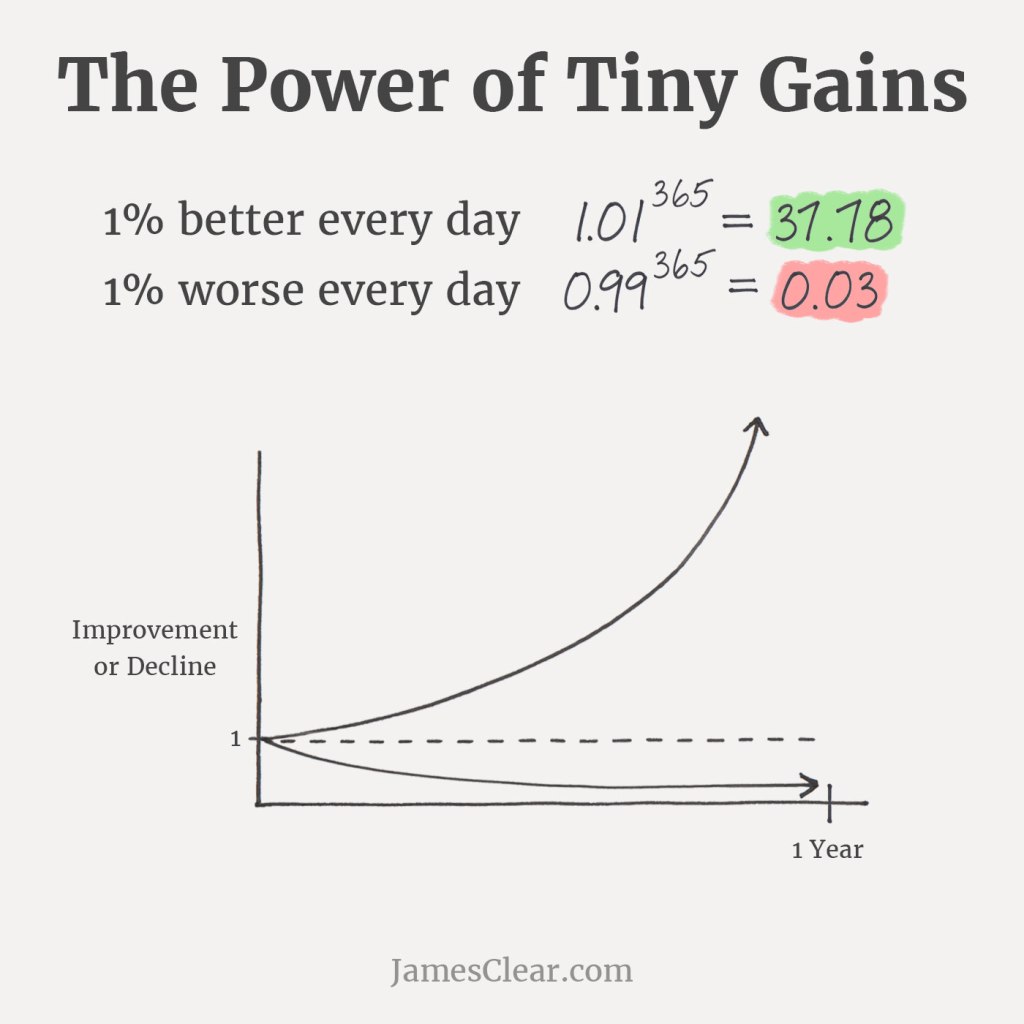
Something I’m constantly reminding myself of is the art of continuous improvement, often referred to as the 1% mindset. James Clear discusses this concept in his book, “Atomic Habits.”
The idea is that improving by just 1% each day may not seem significant day-to-day, but by the end of the year, you’ll be approximately 37 times better.
If you have any experience with investing and understand the wonders of compound growth, you know exactly what I’m talking about.
Remember to celebrate the small wins and not just focus on the results.
Take Small Kaizen Steps
Kaizen is a Japanese philosophy that focuses on continuous, incremental improvements, emphasising small, steady changes over time to achieve long-term progress.
The best way to make progress is to start and make adjustments as you go. This is something I’ve always struggled with, but I’ve learned that a ship is far easier to steer when it’s moving.
As I explain in the shorts below, if a ship is sitting still in the water, it’ll drift aimlessly—or worse, crash into the shore.
As the 1 in 60 rule teaches us, progress doesn’t have to be perfect; it just has to move.
Prioritise and Be Realistic
As someone who’s overloaded themselves with too many plans, I know how easy it is to set yourself up for disappointment and become overwhelmed and burned out.
Break goals into smaller, manageable steps. Instead of aiming for a ‘perfect’ end result, aim for consistent progress. Think in 1% improvements rather than overnight transformations.
“Overnight success takes about ten years.”
Perfectionists often struggle to decide where to focus their energy because everything feels important. Tools like the Eisenhower Matrix (see below), Kanban boards, or even a simple handwritten to-do list can be very useful.

Practise Self-Compassion
Go easy on yourself! There will be days when you feel super productive and days when you may just need to rest. Treat yourself with the same kindness you’d show a friend.
Perfectionism will always be part of who I am, but these strategies remind me that I can use it as a tool rather than letting it control me. Progress, no matter how small, will always outweigh the illusion of ‘perfect.’
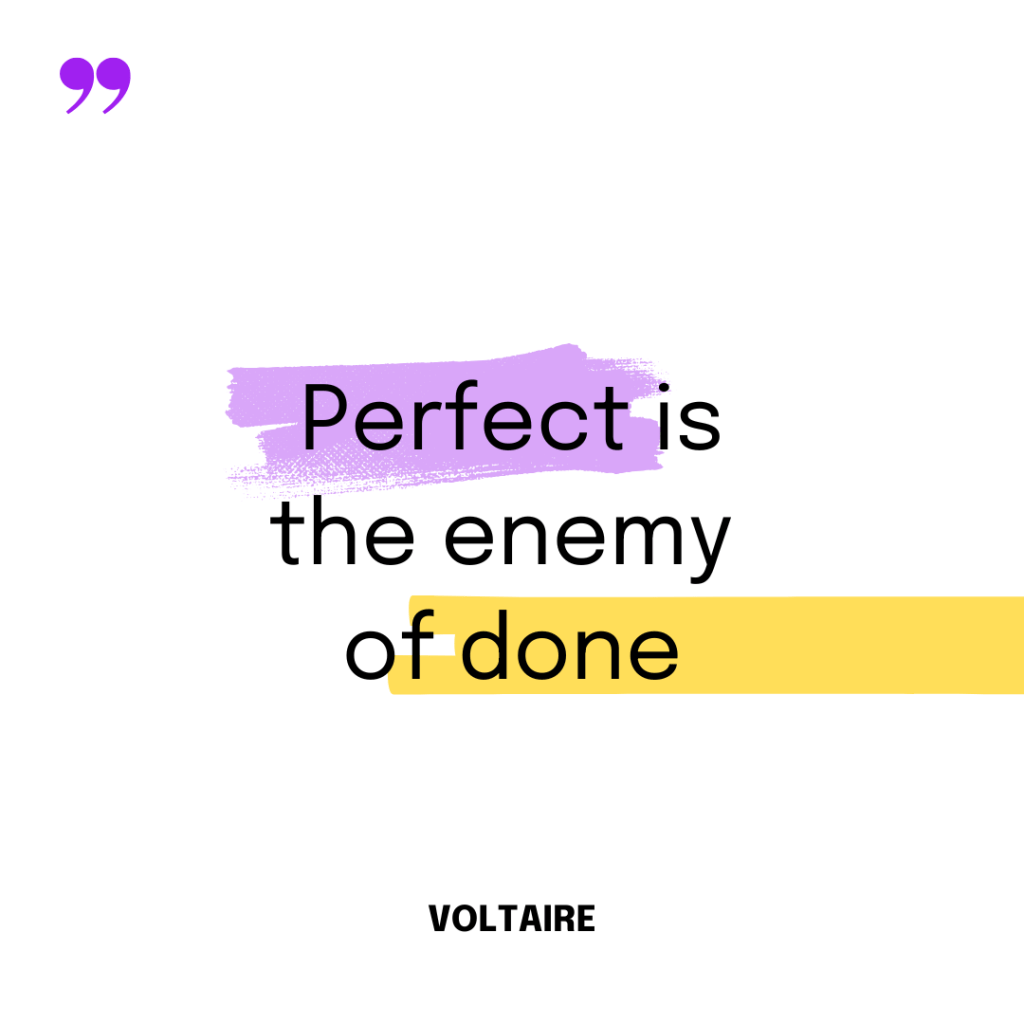
And finally, a reminder that feels just as relevant to me while finishing this blog as it does to any other task: Perfect is the enemy of done!
 Prajay
Leave a reply to Khalid Archetype6 Cancel reply